For most school children, the idea of a police station isn’t shaped by what they’ve actually seen, but by fragments of imagination. A scene from a movie, movements their eyes captured, a story overheard at home, a glance at a khaki uniform on the street – all of these moments leave an impression. And so, every child carries a different picture in their mind. Some smile and wave when they see a police officer, while others instinctively step back, even if the person in uniform isn’t a police officer at all, he may be a driver or someone who work in khaki uniform.
For a few, the khaki inspires dreams “One day, I want to be like that officer.” But for others, it stirs unease, sending them running to hide. Some frightens for traffic police who is clearing the traffic, some feels pity for traffic police who work under hot sun. Why such contrasting emotions? Why does one child see respect and another see fear? Perhaps because most have never truly stepped inside a police station to know the reality behind the walls. And that’s where our journey began – when our community school decided to take the children on a visit to the local police station with their parents, not just to look at the uniform, but to discover the people, the work, and the truth that lies within.
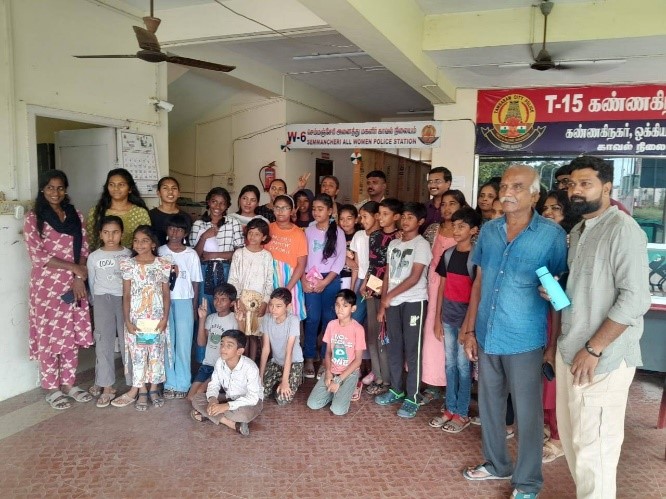
The visit to T15 Kannagi Nagar Police Station turned out to be an eye-opening experience for our community school students. For most of them—nearly 98 percent—it was the very first time stepping inside a police station and speaking directly with an officer. What began with curiosity and mixed emotions soon transformed into learning, respect, and newfound confidence.
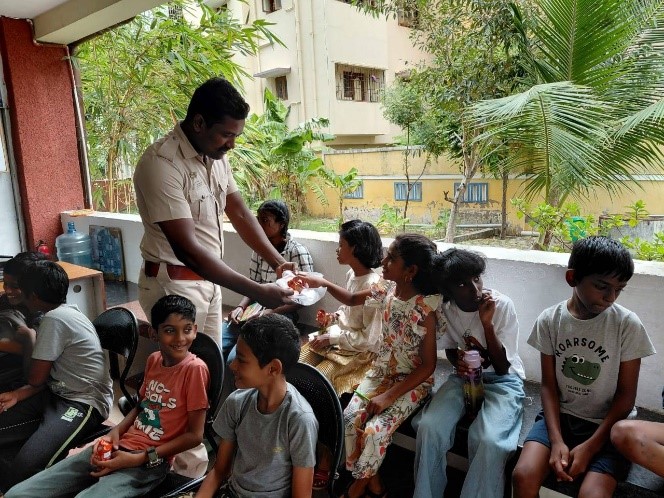
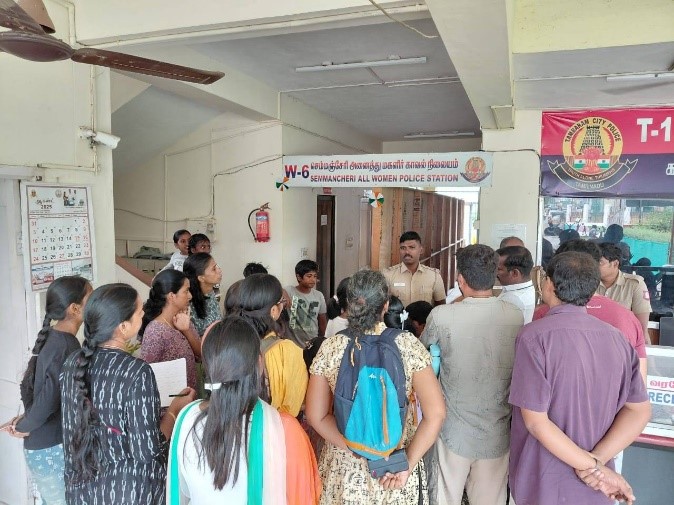
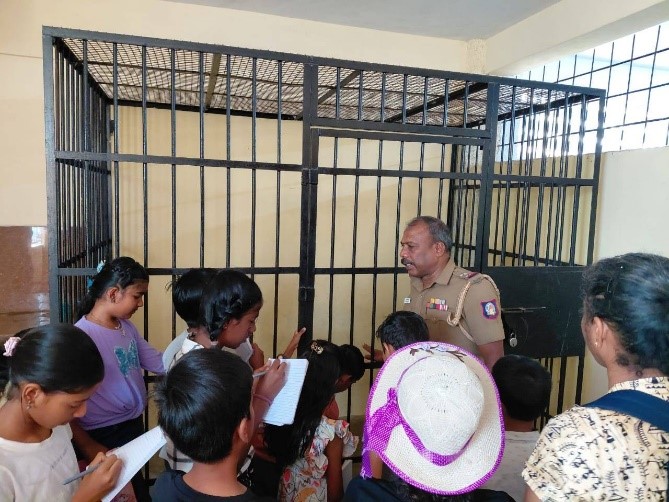
The officers welcomed the children warmly and explained, in simple words, how a police station function. They patiently described the processes of law and order, and the students also curiously asked thoughtful questions. Through this exchange, many of the myths and misconceptions that children carried about the police began to fade.
The children learned vital lessons like:
- How police station actually works
- How police support children and women in times of need
- The laws that protect women and child safety
- The rights and duties of every citizen
- The limits and responsibilities of a police officer
- How to approach a police station and file a complaint
For many, this visit was a secret unfolded.
One child reflected, “Until today, I thought the duty of the police was only to file FIRs, arrest criminals, and produce them in court. But now I understand that so much more happens behind the scenes.”
Another child said with confidence, “From now on, if I face any problem—or see anyone else in trouble—I will not be afraid to call 1098.”
These words captured the real success of the visit. Children who once carried fear, doubt, or confusion about the police now began to see them as protectors and guides. They understood that the khaki uniform symbolizes safety, justice, and responsibility.
We hope that the next time these children see a police officer, they will feel assured that they are in safe hands—that the law is there to protect them, and that they live in a country where order and justice prevail. Even more, they will carry this knowledge back to their friends, spreading awareness about the important role of the police in society.
Why Such Visits Matter
This visit was not just an outing—it was a bridge between children, society, and the police force.
For students, it broke barriers of fear and misunderstanding, replacing them with awareness, trust, and courage. Children who once hesitated to approach a police officer now feel confident that the police are allies they can turn to in times of need.
For the police department, it was an opportunity to connect directly with young minds, to present the human side of law enforcement, and to nurture trust in the next generation. Such interactions allow officers to become role models and mentors, beyond their duties of maintaining law and order.
And for society, the impact is lasting. When children grow up with a balanced and respectful understanding of the police, they carry that message to their families and communities. They become ambassadors of trust—teaching others that the police are not figures of fear, but pillars of safety and justice.
A Note of Gratitude
We sincerely thank the Kannagi Nagar Police Department for giving our students this invaluable experience. By opening their doors, they not only educated young learners but also planted seeds of confidence, respect, and responsibility that will shape the future of our community.