When Children Lead, Change Begins
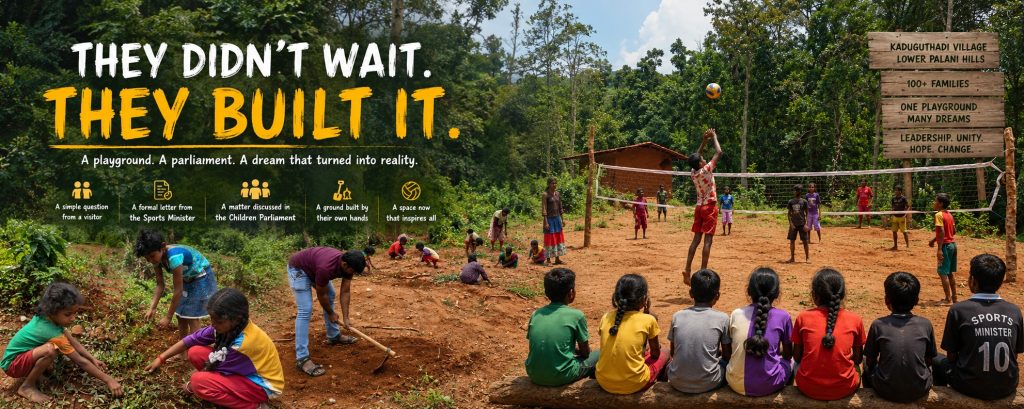
The first time I visited Kaduguthadi village, tucked beautifully in the lower Palani Hills, I didn’t know that a simple question would turn into something so meaningful.
It’s one of the largest tribal villages in the region, home to around 100 families. The place felt alive — children playing in front of their homes, the quiet rhythm of the hills, and the forest standing close like a silent guardian.
I walked up to a few children and asked them a simple question — “What do you need?”
Their answer was immediate and honest.
“We need a playground to play.”
That was it.
They told me how the older boys go deep into the forest to play volleyball. But the younger ones are not allowed to go — it’s too risky. Elephants, gaurs, and other wild animals move through those forests. So they stay back, watching, waiting, wishing.
A village that has existed for more than half a century… children surrounded by endless open land… and yet, not a small safe space to simply play.
But what happened next is what makes this story truly special.
Instead of it remaining just a conversation, the children took it seriously. The idea was discussed in their children’s parliament. It became a matter, a proposal.
The Sports Minister of the children’s parliament wrote a formal letter to the Maivarai Ecovillage office, requesting support to create a playground.
And then came the next question — how do we make it happen?
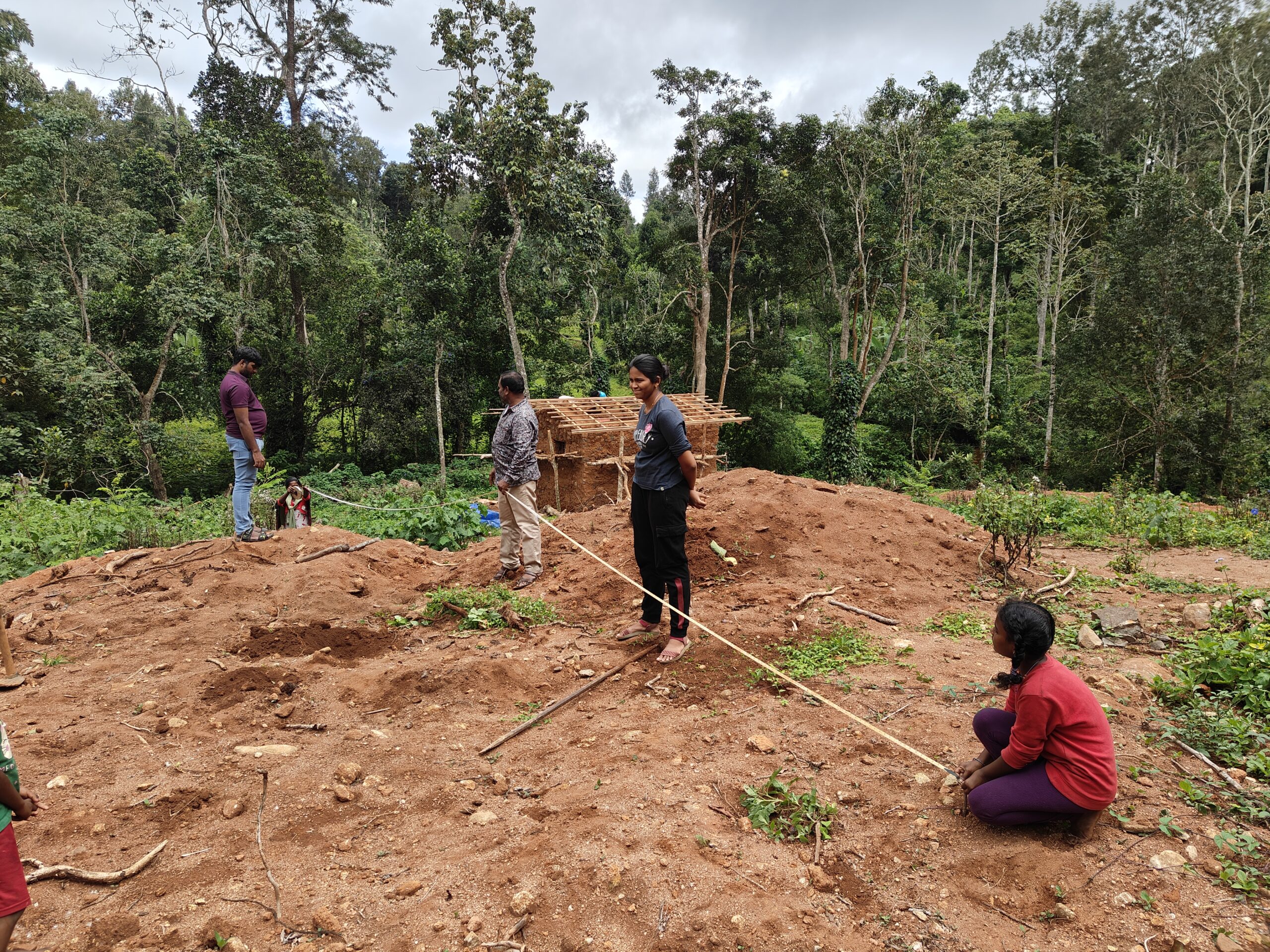
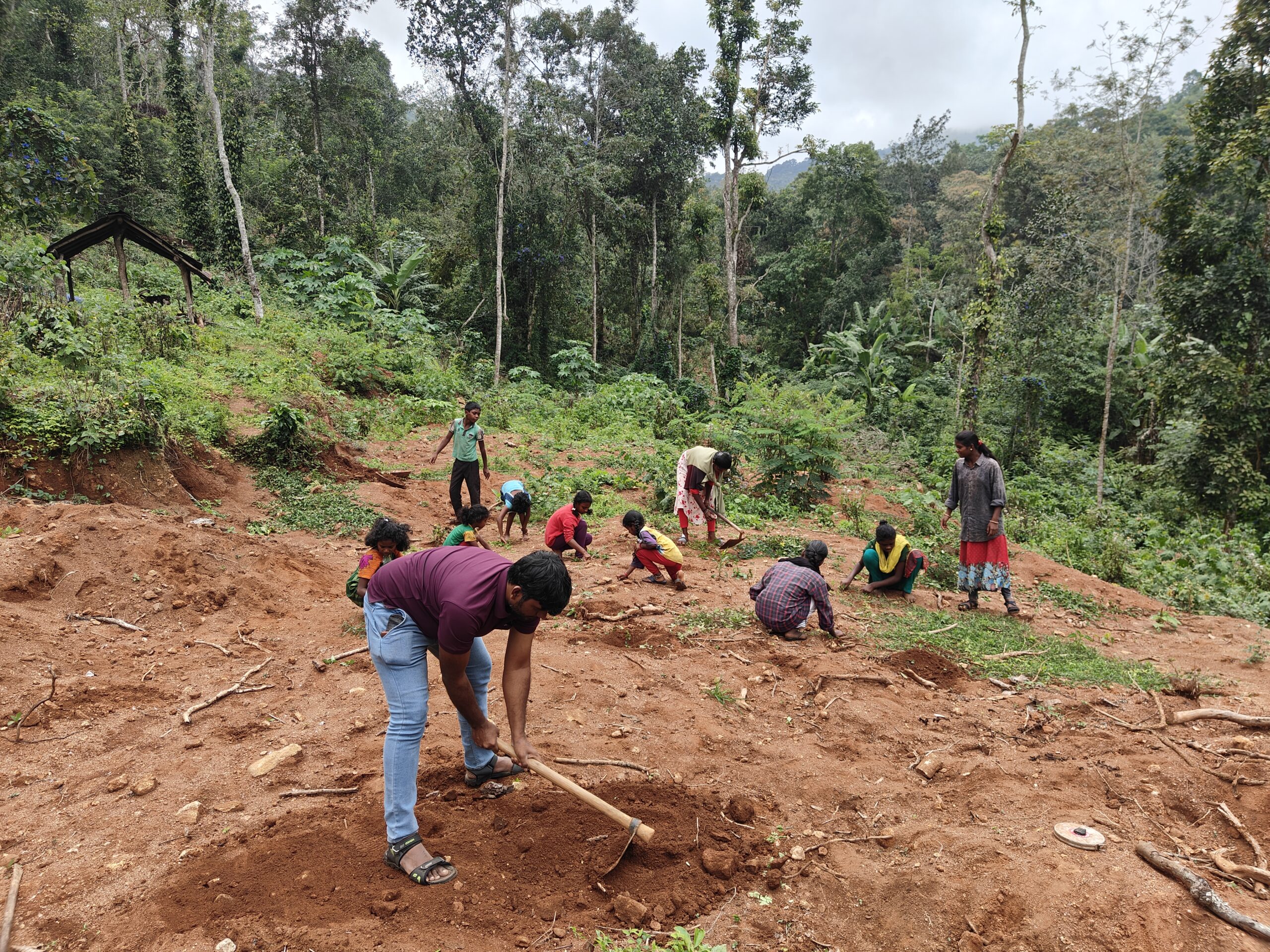
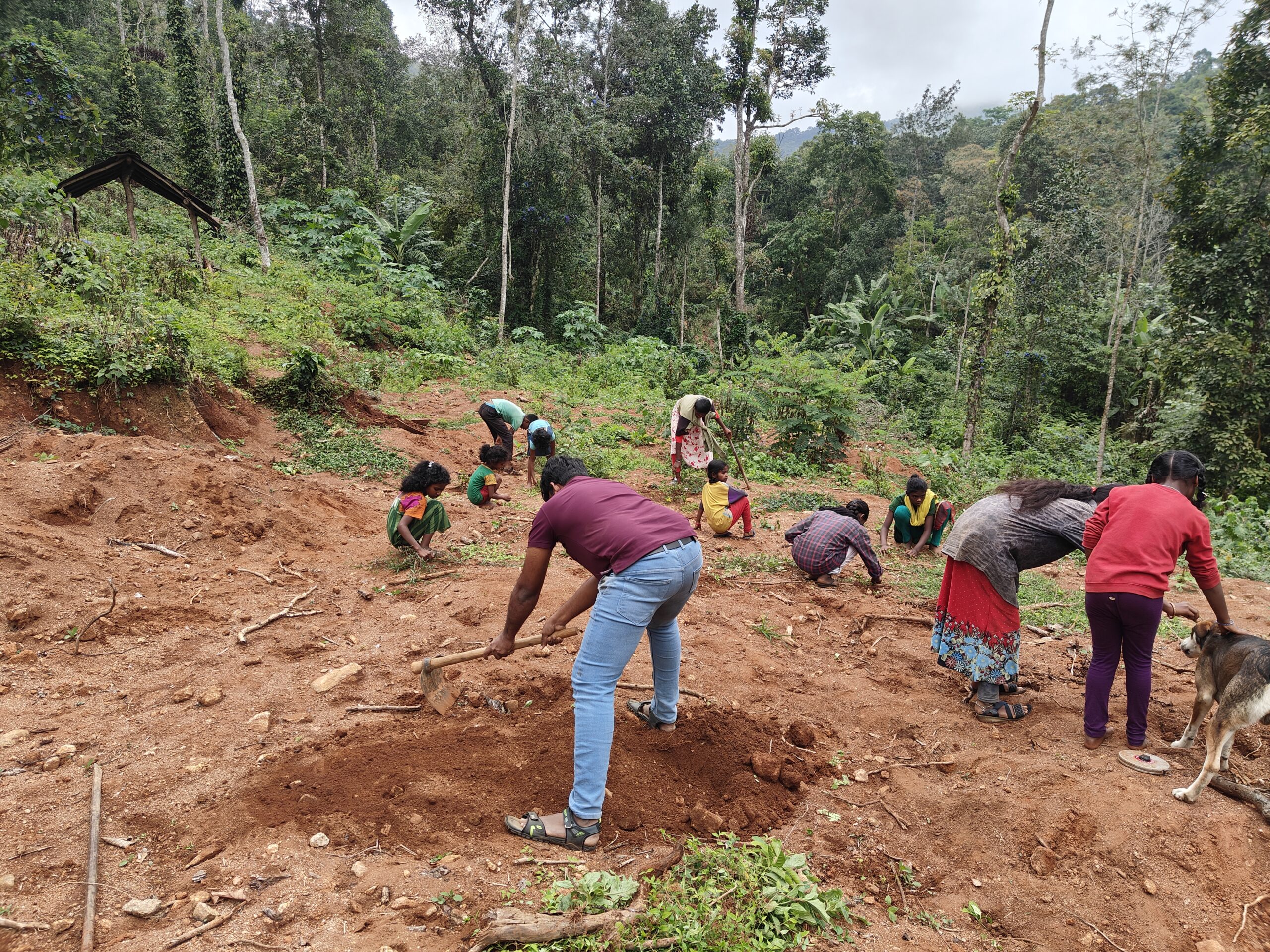
The land needed to be cleared, leveled, and prepared.
Almost immediately, the Sports Minister and the Chief Minister came up with an idea —
“Why don’t we use our holidays to build our own playground?”
And that’s exactly what they did.
Children came together. They worked on the land. They cleared it, leveled it, shaped it — slowly turning a piece of earth into a ground of their own.
Back at Maivarai Ecovillage, we supported them with what we could — volleyballs, nets, and encouragement.
But the ground?
That, they built themselves.
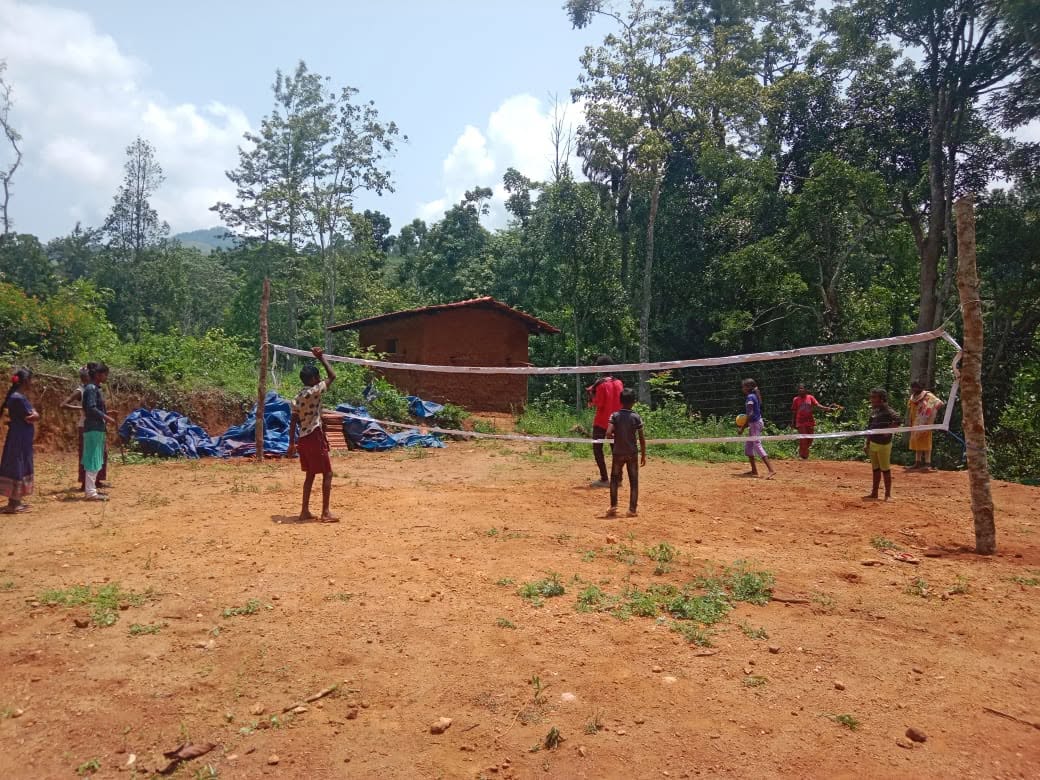
Today, those same children play there — with pride, joy, and a deep sense of ownership. It’s not just a playground. It’s something they imagined, asked for, worked on, and created together.
And something even more beautiful has begun to happen.
The playground is no longer just for children. The youth of the village have started using the space too. What was once an idle time with fewer options is now filled with games, movement, and shared energy. The ground has quietly become a space that draws young people away from alcohol and other distractions — offering them something healthier, stronger, and more meaningful.
Sometimes, dreams are not about being given something.
Sometimes, they are about coming together, taking responsibility, and building something with your own hands.
Now they are ready — ready to sweat, ready to jump, ready to fall, and ready to rise again.
And in that small ground, something much bigger has taken root —
leadership, responsibility, and the quiet power of a community that chose a different path.